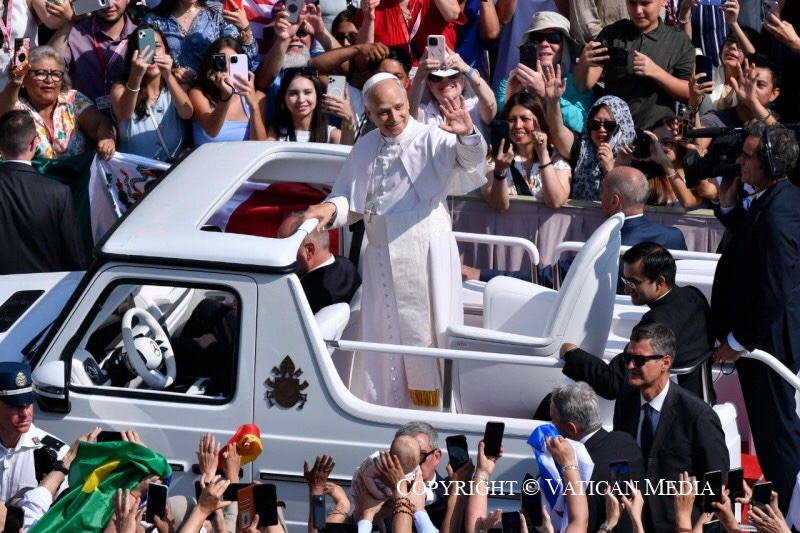
In today’s General Audience, (Wednesday, June 18, Jubilee Year of Hope) our Holy Father, Pope Leo XIV, continues to guide us in deepening our understanding of Jesus Christ as the true source of hope, reflecting on the healing of the paralytic at the pool of Bethesda—a Gospel scene that speaks profoundly to our human longing for wholeness, especially in moments of helplessness and discouragement.
The Pope’s message is both gentle and challenging: Jesus does not merely see our suffering; He draws near, asking us “Do you want to be healed?”—and invites us to rise, to carry even the marks of our past, and to begin anew.
Kindly read the summary of today’s catechesis (below)


Dear Brothers and Sisters,
In our continuing catechesis on the Jubilee theme of “Jesus Christ our Hope”, we now consider Jesus’ miraculous cure of the paralytic at the pool of Bethesda. Many physically disabled people came to bathe there in hope of a cure, yet Jesus chose that man, who had been paralyzed for thirty-eight years and was unable to enter the pool by himself. Jesus’ question to him – “Do you want to be healed?” – was penetrating. It challenged the paralytic’s sense of helplessness and resignation, and invited him to hope that his life could be changed. Jesus tells him to stand, take up his mat and walk. The mat was in fact the symbol of the man’s past paralysis, physical and spiritual, which he can now accept and leave behind as he begins his new life. In this Jubilee of hope, may we remember in our prayers all those who suffer and feel tempted to discouragement. Whatever problems or setbacks we may face in life, let us turn to Jesus, acknowledge our desire for healing, and accept his promise of freedom and newness of life.


 Sistermags